Not Just Saying, But Doing the Will of God.
Dear brothers and sisters in Christ,
Today’s readings challenge us to look beyond our words and examine our actions. It is easy to say “yes” to God, to promise that we will obey Him, to call ourselves Christians, or to appear religious before others. But the real question is: Do our lives actually show that we are doing the will of God?
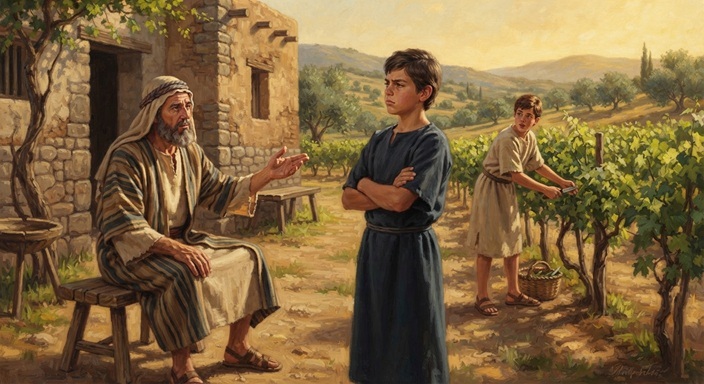
In the Gospel, Jesus gives us the story of two sons. The father tells the first son to go and work in the vineyard. The son initially says, “No,” but later changes his mind and goes. The father asks the second son, who says, “Yes, sir,” but he does not go.
Jesus then asks a simple but powerful question:
“Which of the two did his father’s will?”
The answer is obvious: the one who went.
This Gospel invites us to examine not merely what we say, but what we do.
1. “Son, Go Out and Work in the Vineyard Today”
The father says to his son:
“Son, go out and work in the vineyard today.”
Notice the word “today.”
God's call is not merely something for the distant future. God calls us to respond to Him in the present moment.
There are many things we intend to do: “I will change later.” “I will pray more later.” “I will forgive later.” “I will become more serious with God later.”
But the Gospel speaks about today.
The opportunity to do God's will is before us now.
Our Christian life is not built only on good intentions. It is built on concrete decisions and actions.
2. The First Son Said “No,” but Later Changed His Mind
The first son answered:
“I will not.”
It was a wrong response. He refused his father's request.
But something happened afterward:
“He changed his mind and went.”
This is very important.
Jesus shows us that a person can make a wrong decision and still change.
A person may have lived badly in the past but can change. Someone may have neglected God but can return to Him. Someone may have failed in his responsibilities but can begin again.
The first son's initial “no” was not the end of his story.
What mattered was that he changed his mind and acted.
Therefore, we should never think that our past failures mean we can no longer do God's will.
As long as we are willing to change, there is still an opportunity to respond to God.
3. The Second Son Said “Yes,” but Did Not Go
The second son said:
“Yes, sir.”
It sounds like the perfect answer.
He was respectful. He appeared obedient. His words were correct.
But then:
“He did not go.”
This is where Jesus directs our attention.
The problem was not his words. The problem was the absence of action.
Sometimes our Christianity can become like the second son's response.
We say the right things, but our actions tell a different story.
We say we love God, but we may refuse to do what God asks of us.
We say we are Christians, but our relationships, our decisions, our treatment of others, and our daily conduct may not reflect the Gospel.
The question Jesus asks today is therefore not simply:
“What do you say?”
It is:
“What do you do?”
4. Doing the Will of God Is More Important Than Making Promises
Jesus asks:
“Which of the two did his father’s will?”
Not, “Which one spoke better?”
Not, “Which one made the better promise?”
But which one did the father's will?
This is the heart of the Gospel.
Our faith must become visible in our lives.
A Christian cannot live only by words. The will of God must influence our choices, our relationships, our responsibilities, and the way we treat other people.
The first son had a bad beginning but a good response afterward.
The second son had a good beginning in words but failed to follow through.
Jesus therefore teaches us that obedience is demonstrated by action.
5. It Is Never Too Late to Change
The first son initially refused his father, but later changed his mind.
That gives us a message of hope.
Perhaps there are areas of our lives where we have said “no” to God.
Perhaps we have delayed doing what we know is right.
Perhaps we have allowed anger, pride, selfishness, or other weaknesses to control our decisions.
The Gospel tells us that we can still change.
The important thing is not to remain permanently in our “no.”
We can move from “no” to “yes” through our actions.
The first son teaches us that conversion is possible.
6. Ezekiel: God Looks at the Change in Our Lives
The first reading from Ezekiel says:
“When the wicked turn away from the wickedness they have committed and do what is lawful and right, they shall save their life.”
Again, the emphasis is on turning away and doing what is right.
God does not desire our destruction. He desires that we turn from what is wrong and choose what is right.
This connects directly with the Gospel.
The first son initially refused, but he changed and went.
The message is clear: what matters is the direction of our life.
If we have been going in the wrong direction, we can turn around.
If we have failed, we can begin again.
If we have been saying “no” to God through our actions, we can change and begin saying “yes” through our lives.
7. “Make My Joy Complete”
St Paul gives us another important lesson in the second reading:
“Make my joy complete: be of the same mind, having the same love, being in full accord and of one mind.”
Paul calls the Christians to unity, love, humility, and concern for others.
He says:
“Do nothing from selfish ambition or conceit, but in humility regard others as better than yourselves.”
This gives us a practical way of doing God's will.
Doing God's will is not simply about saying prayers. It must affect the way we live with other people.
Are we selfish or considerate?
Are we proud or humble?
Do we always want our own way?
Can we put aside our interests for the good of another person?
The Christian life requires us to move from words to action.
8. Christ Himself Gives Us the Perfect Example
Paul then points us to Christ:
“He humbled himself and became obedient to the point of death—even death on a cross.”
Jesus did not merely speak about obedience.
He lived it.
His obedience was complete.
His humility was not just something He taught others; He demonstrated it Himself.
Therefore, when we are asked to humble ourselves, forgive, serve, sacrifice, or put another person's good before our own, we are being called to imitate Christ.
Christ shows us what it means to say “yes” to God with one's life.
9. “Every Knee Should Bend”
Paul continues:
“At the name of Jesus every knee should bend, in heaven and on earth and under the earth, and every tongue should confess that Jesus Christ is Lord.”
Our confession of Jesus as Lord must not remain only on our lips.
If Jesus is truly Lord of our lives, then His will should influence the way we live.
Our words should correspond with our actions.
Our faith should correspond with our conduct.
Our “yes” to Christ should be visible in the choices we make every day.
10. Let Our “Yes” Be Seen in Our Lives
Today, Jesus gives us a simple question to take home:
Which of the two sons are we?
Are we the person who says “yes” but does not act?
Or are we the person who may have failed initially but eventually changes and does what is right?
The readings invite us to examine ourselves honestly.
When God calls us to change, do we respond?
When we know something is wrong, are we willing to turn away from it?
When we are called to humility, do we humble ourselves?
When we are called to care for others, do we act?
When we say that Jesus is Lord, does our daily life demonstrate it?
Our Christian life is not measured only by what we say in church. It is revealed by what we do when we leave the church.
Conclusion
Dear brothers and sisters,
Today's readings remind us that God is looking for a response that is lived, not merely spoken.
The first son said “no,” but he changed and went.
The second son said “yes,” but he did not go.
Jesus asks us to look honestly at our own lives.
Perhaps we have said “no” to God in the past. The good news is that we can still change.
Perhaps we have said many “yeses” to God with our lips. The challenge is to make those “yeses visible through our actions.
Let us therefore not be Christians who only speak about faith, but Christians who live their faith.
Let our words and actions agree.
Let our faith be seen in humility, love, obedience, and concern for others.
And when God says to us, “Go out and work in the vineyard today,” may our lives give the answer that truly matters:
Yes—and we will go.
“Which of the two did his father’s will?”
May our answer not be merely spoken with our lips, but demonstrated by our lives.
Amen.